Back Pain Isn't One Thing: How Pilates Can Help Different Back Pain
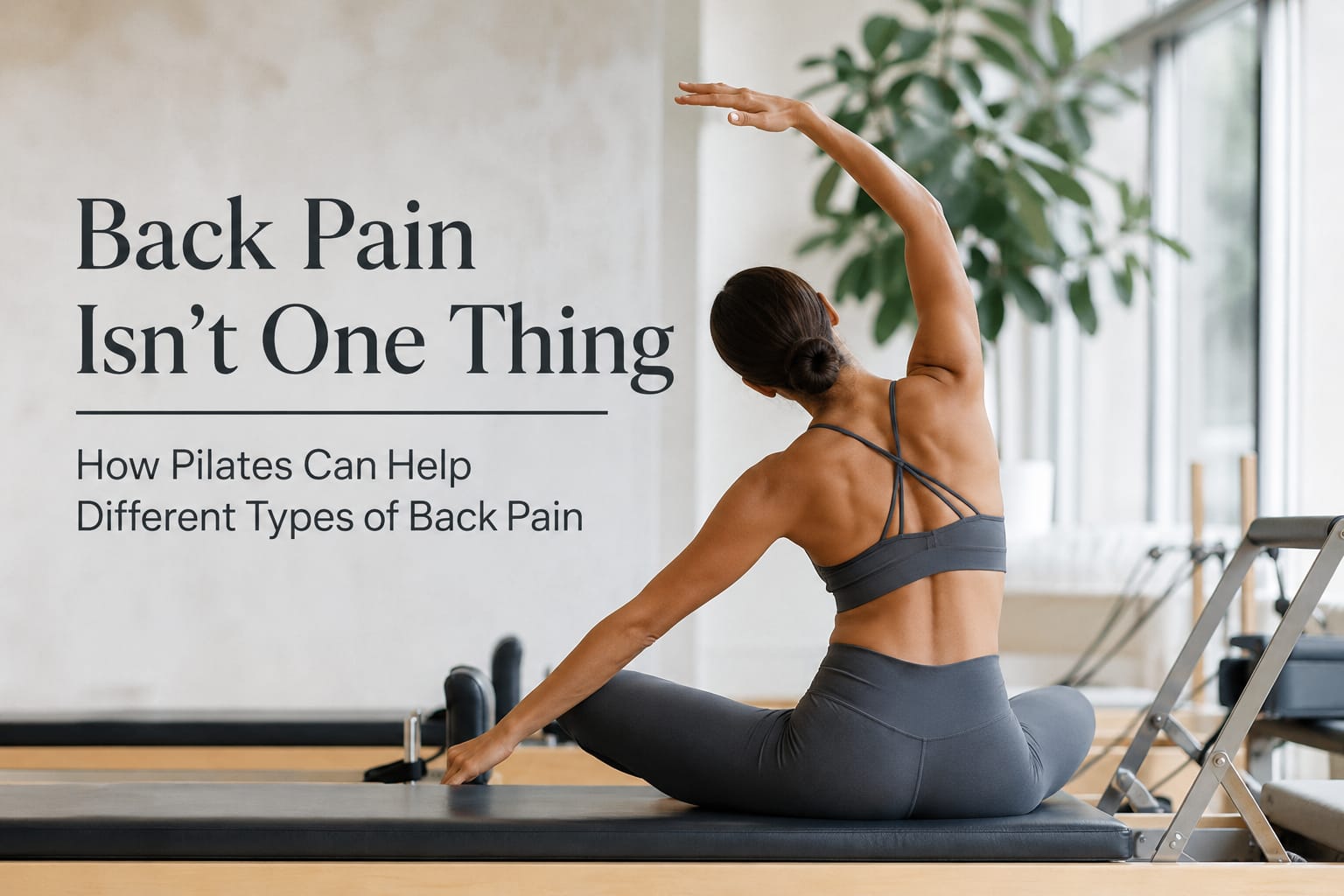
Not all back pain is the same. From neck tension and mid-back stiffness to lower back discomfort and sciatica, understanding the location and possible causes of your pain is the first step toward finding the right solution. Learn about common back pain myths, the role of movement and the nervous system, and how Pilates may help improve strength, mobility, and confidence in movement.
Back pain is one of the most common reasons people walk through our doors at Haven Pilates.
Many arrive looking for the same answer: "What exercises should I do for my back pain?"
The truth is, there isn't one exercise, or one solution, that works for everyone.
One of the biggest misconceptions about back pain is that all back pain is the same.
But just like not all headaches are the same, not all back pain is the same. The location of your pain, your movement habits, your lifestyle, your stress levels, and your overall strength can all play a role in what you're experiencing.
That's why I like to think of back pain as having a GPS. Before we can talk about solutions, we need to understand where the pain is coming from and what might be contributing to it.
Neck Pain and Upper Back Tension
Pain in the neck and upper back is incredibly common today.
Many of us spend hours looking down at phones, working on computers, driving, or sitting in positions that keep our bodies in the same posture for long periods of time.
People often describe symptoms such as:
- Tightnessin the neck
- Tension headaches
- Pain between the shoulder blades
- Stiffness when turning the head
While the discomfort is felt in the neck, the neck is not always the only area involved. Limited upper back mobility, poor shoulder mechanics, prolonged sitting, and even breathing patterns may contribute to increased tension in this region.
Mid-Back Pain: The Forgotten Area
The mid-back, also known as the thoracic spine, often doesn't get much attention until it starts to hurt.
This area is designed to move, rotate, and work together with the rib cage during breathing.
However, long hours of sitting, slouching, and limited movement can leave this region feeling stiff and restricted.
When the mid-back loses mobility, the body often compensates elsewhere. The neck may move more than it should. The lower back may move more than it should. Over time, this can contribute to discomfort in multiple areas.
Lower Back Pain: More Than Just a Weak Core
When people think about back pain, they are usually thinking about the lower back.
For years, many people were told that lower back pain is simply caused by a weak core. While core strength can be important, the story is usually much more complex.
Lower back pain may be influenced by factors such as:
- Reduced hip mobility
- Weakness in the glutes and supporting muscles
- Repetitive movement patterns
- Previous injuries
- Long periods of sitting
- Stress and poor sleep
- Fear of movement after experiencing pain
Research has also shown that imaging findings such as disc bulges, degeneration, and other age-related changes can be found in people who have no pain at all.
This doesn't mean imaging is unimportant. It means that pain cannot always be explained by an MRI alone. The whole person matters, not just the image.
What About the SI Joint?
Pain around the dimples of the lower back is often blamed on the sacroiliac joint, or SI joint.
While the SI joint may play a role in some cases, discomfort in this area can also be influenced by hip strength, pelvic stability, movement patterns, and muscle imbalances.
This is one reason why a thorough assessment and individualized approach are so important.
The Missing Piece: Your Nervous System
One aspect of back pain that often gets overlooked is the nervous system.
Pain is not simply a measure of tissue damage. It is a complex experience influenced by many factors, including stress, sleep, previous injuries, emotions, and overall health.
Have you ever noticed that everything hurts more when you're exhausted, stressed, or overwhelmed?
You're not imagining it.
The nervous system plays an important role in how we experience pain. This doesn't mean the pain is "all in your head." It means the body and brain work together, and both deserve attention when addressing long-term discomfort.
What Most People Get Wrong About Back Pain