Pilates vs. Strength Training: Do You Really Need Both? Let's dig in...
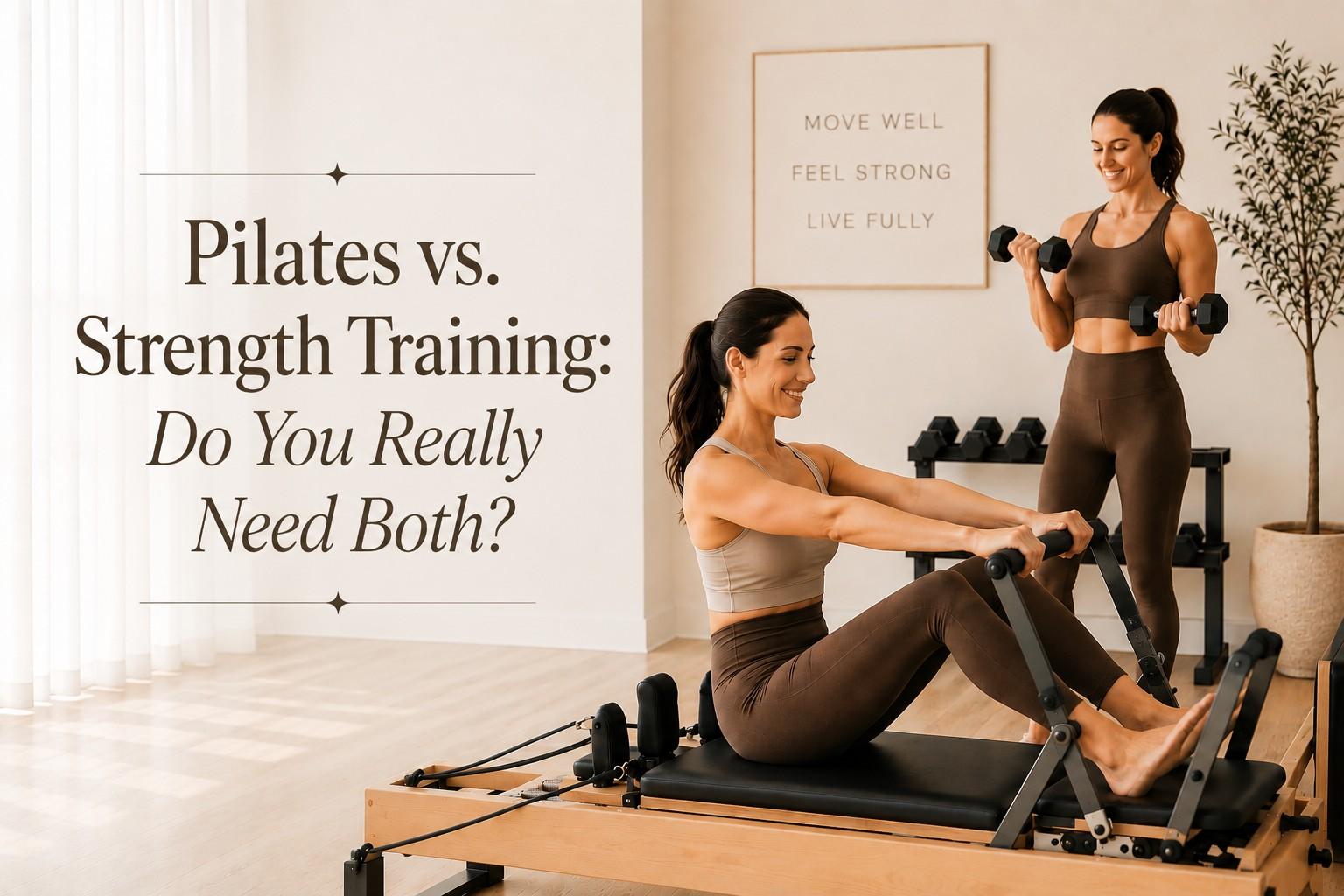
Discover how these two powerful forms of exercise complement each other to build strength, improve posture, support healthy aging, and help you move with confidence. Learn why combining strength training with Reformer Pilates may be one of the best investments you can make in your long-term health and wellness.
If you've ever wondered whether you should choose Pilates or strength training, you're not alone.
It's one of the questions we hear most often at Haven.
The truth is, they're not competing workouts. They're different tools, each helping your body in a unique way.
Think about building a house. Before you decorate the rooms or add beautiful finishes, you need a strong foundation. But having only a foundation isn't enough - you also need walls, support beams, and a roof. Your body works the same way.
Pilates and strength training each contribute something important. Understanding how they complement one another can help you train smarter, move better, and feel stronger for years to come.
What Strength Training Does Best
Strength training focuses on gradually challenging your muscles with resistance. Whether you're lifting dumbbells, using machines, or performing bodyweight exercises, the goal is to increase your muscles' ability to produce force.
Over time, strength training can help:
- Build muscle mass
- Increase bone density
- Improve metabolism
- Make everyday tasks feel easier
- Support healthy aging by preserving muscle
These are benefits that become increasingly important as we get older.
But strength isn't only about how much weight you can lift.
What Pilates Does That Strength Training Often Doesn't
Pilates teaches your body how to use that strength efficiently.
Instead of asking, "How much can you lift?" Pilates asks, "How well can you move?"
Every exercise challenges you to improve your posture, breathing, balance, coordination, and body awareness while moving with control.
Pilates helps you develop:
- Better posture
- Improved spinal mobility
- Core stability
- Balance and coordination
- Joint control
- Flexibility that supports movement rather than simply increasing range
Many people are surprised to discover muscles they didn't even know they had.
That's because Pilates trains the smaller stabilizing muscles that help support your joints and create efficient movement patterns.
Why Strong Muscles Aren't Always Enough
Imagine driving a powerful sports car with misaligned wheels.
The engine is incredibly strong, but the ride doesn't feel smooth, and over time, unnecessary wear develops.
Our bodies can work the same way. You can have strong muscles, but if your posture, alignment, breathing, or movement patterns aren't working well together, your body may compensate in ways that create stiffness, discomfort, or inefficient movement.
That's one reason so many athletes, runners, golfers, tennis players, and weightlifters include Pilates in their training.
They're not replacing strength training - they're improving the way they move.
Does Pilates Build Strength?
Absolutely.
Reformer Pilates uses adjustable springs that create resistance while also providing support when needed.
Many exercises challenge your muscles through long ranges of motion while requiring balance, stability, and control at the same time.
The result is functional strength - the kind of strength that helps you move well in everyday life.
While Pilates alone may not maximize muscle size in the same way a traditional strength-training program can, it absolutely develops meaningful strength that improves the quality of your movement.
Do You Need Both?
Yes, especially as you get older.
Strength training and Pilates each play a critical role in keeping your body strong, mobile, and resilient over time. As we age, maintaining muscle mass, bone density, balance, and joint health becomes increasingly important, and relying on just one type of exercise often leaves gaps.
Strength training helps you build and preserve muscle and bone.
Pilates helps you move well, stay aligned, and reduce unnecessary strain on your body.
Together, they create a more complete approach to long-term health and performance.
That said, the best exercise is still the one you will do consistently.
If you don't enjoy what you're doing, it's unlikely you'll stick with it.
So while both are important, consistency matters most. Start with what you enjoy, and build from there.
How to Combine Them
You don't need to spend hours exercising every day.
Many people do well with a simple weekly routine, such as:
- Two to three Pilates sessions to improve posture, mobility, and movement quality.
- Two to three strength-training sessions to build muscle and bone health.
- Daily walking whenever possible for cardiovascular health and recovery.
The exact balance depends on your goals, fitness level, previous injuries, and schedule.
Our Philosophy at Haven Pilates
At Haven, we don't believe movement has to fit into one category.
We believe your body deserves movement that helps you become stronger, move with greater confidence, and continue doing the things you love for years to come.
Whether Pilates is your primary workout or part of a larger fitness routine, its purpose is the same: helping your body move well.
Because strength isn't only measured by how much you can lift.
It's measured by how confidently you can live.
If you're curious about how Reformer Pilates can complement your current workout routine, or if you're just getting started, we'd love to welcome you to Haven Pilates and help you discover how strong your body is truly capable of becoming.
Not sure where to start?
Read our beginner's guide: What to Expect at Your First Pilates Class. It's the perfect next step before booking your first session. → Read more